In 2025, Holt feeding specialists brought our Child Nutrition Program to an orphanage in Cambodia. Six months later, caregivers at the orphanage are reaping the benefits of their training and children are healthier and happier — thanks to your support!
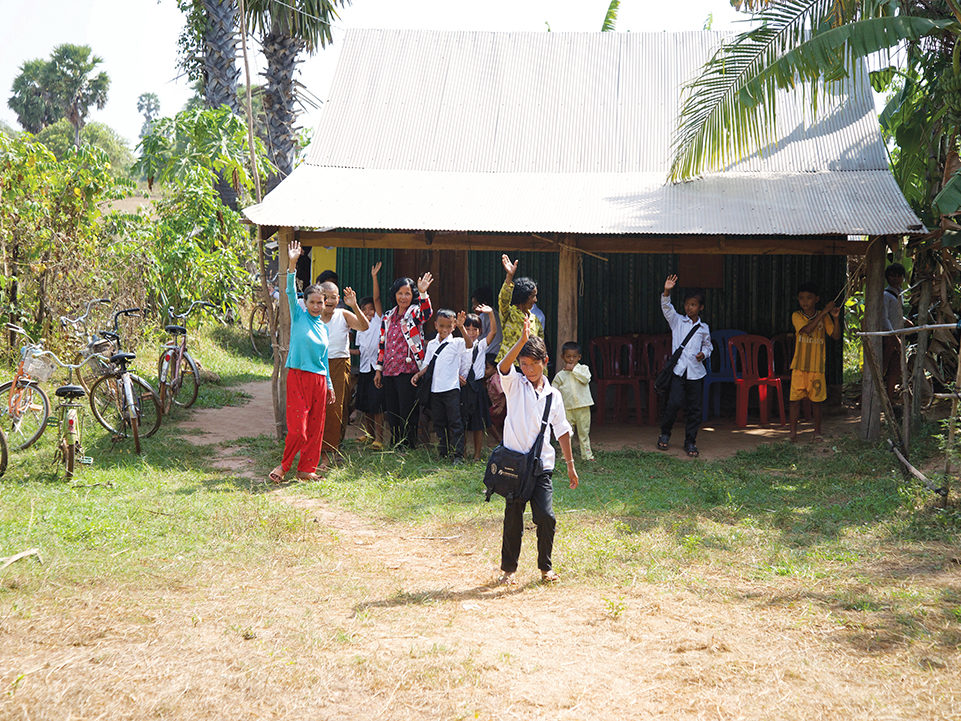
When Holt’s Child Nutrition Program (CNP) team first arrived at the National Center for Infants and Children (NCIC) in Phnom Penh, Cambodia, last October, we saw a familiar sight — one we’ve observed in orphanages around the world. Caregivers were overwhelmed and unequipped to manage the never-ending list of tasks needed to simply provide three daily meals and basic care to the nearly 200 residents at the home.
Not only did the children outnumber the caregivers by a significant margin, but staffing shortages, 24-hour shifts and rooms full of children with highly complex medical needs and severe disabilities created a substantial burden for the caregivers.
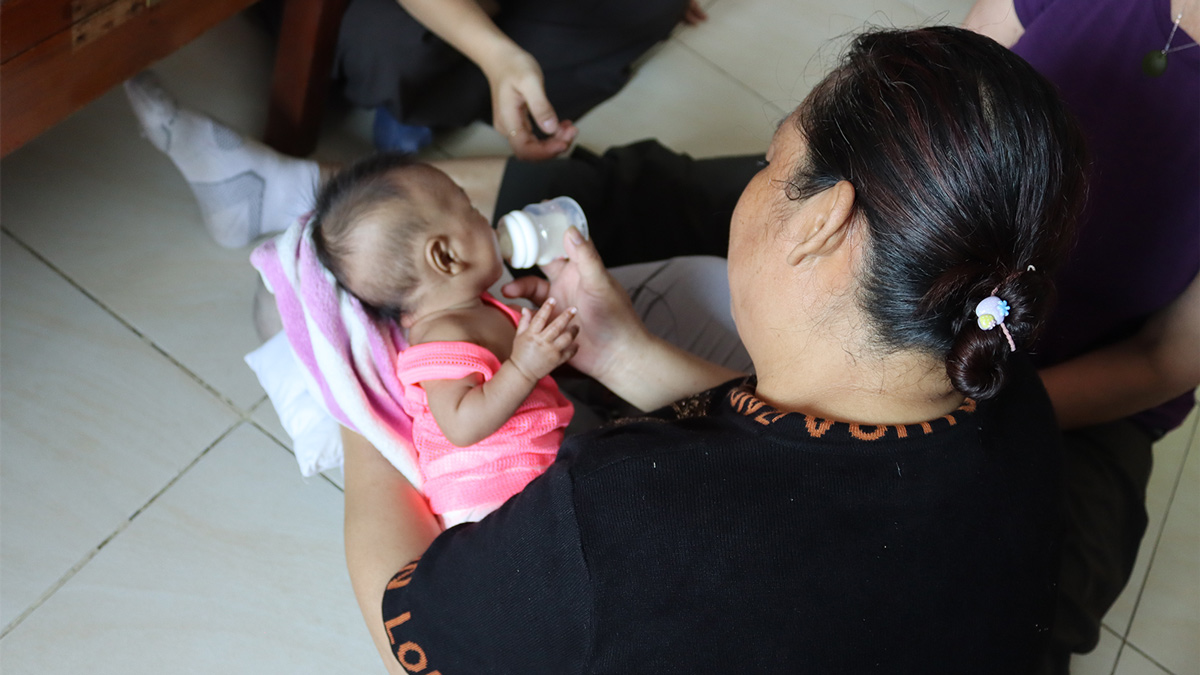
As they faced a constant rush to meet the children’s basic needs, the caregivers found it difficult to improve the children’s nutrition status, support developmental milestones, engage in positive interaction and provide safety at mealtimes for children with disabilities.
The conditions at the NCIC seemed overwhelming — but with your support, caregivers began receiving the help they needed.
Holt Nutritionists Visit the NCIC
In October 2025, in partnership with the organization Plants Earth Life, Holt brought our child nutrition program to the NCIC, with a team that included a nutritionist and feeding specialist. Following a comprehensive needs assessment, our team provided caregivers with intensive training in nutrition assessment, proper hygiene, growth monitoring, practical feeding skills and safe positioning while feeding. Caregivers also received training manuals, growth charts and other resources translated into Khmer, the official language of Cambodia, as well as a health and nutrition screening system.
The training period lasted one week and was a huge success. Based on the results of tests conducted before and after the training period, the caregivers showed improved knowledge in all focus areas, including nutrition, health and safe positioning. But while the participants were highly invested in their training, we knew they needed additional support.
Holt Cambodia Steps In
In the months that followed, Holt’s team in Cambodia offered this support by providing a nutritionist who made monthly visits to the NCIC. The nutritionist mentored caregivers in three key areas: nutrition, health assessments and feeding.
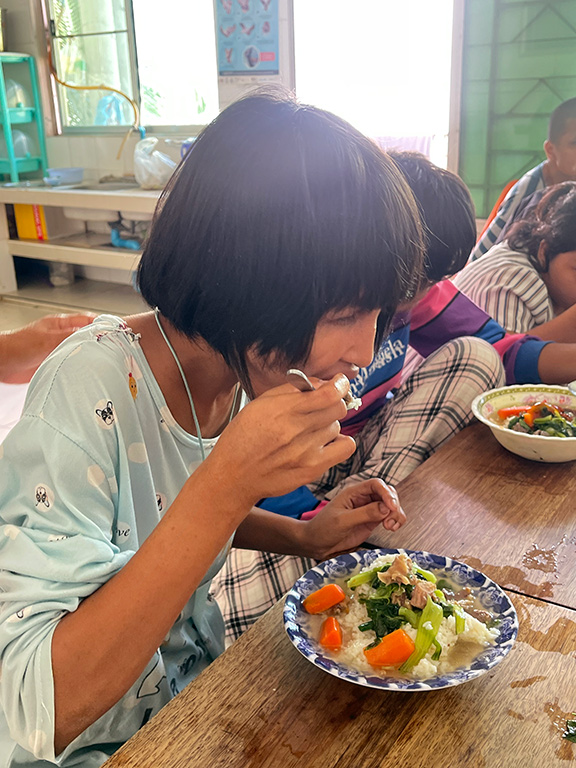
• Nutrition. When Holt’s team first visited the NCIC in October, they educated caregivers on key nutrition concepts like the importance of all food groups and the nutritional value of certain foods. Holt Cambodia’s nutritionist reinforced these concepts — and over time, her efforts paid off! Now the meals at the orphanage are more colorful, diverse and packed with the micronutrients every growing child needs — made possible through your support. Meals that were once bland and consisted mostly of rice are rich in local vegetables, providing better nutrition and joy at feeding times.
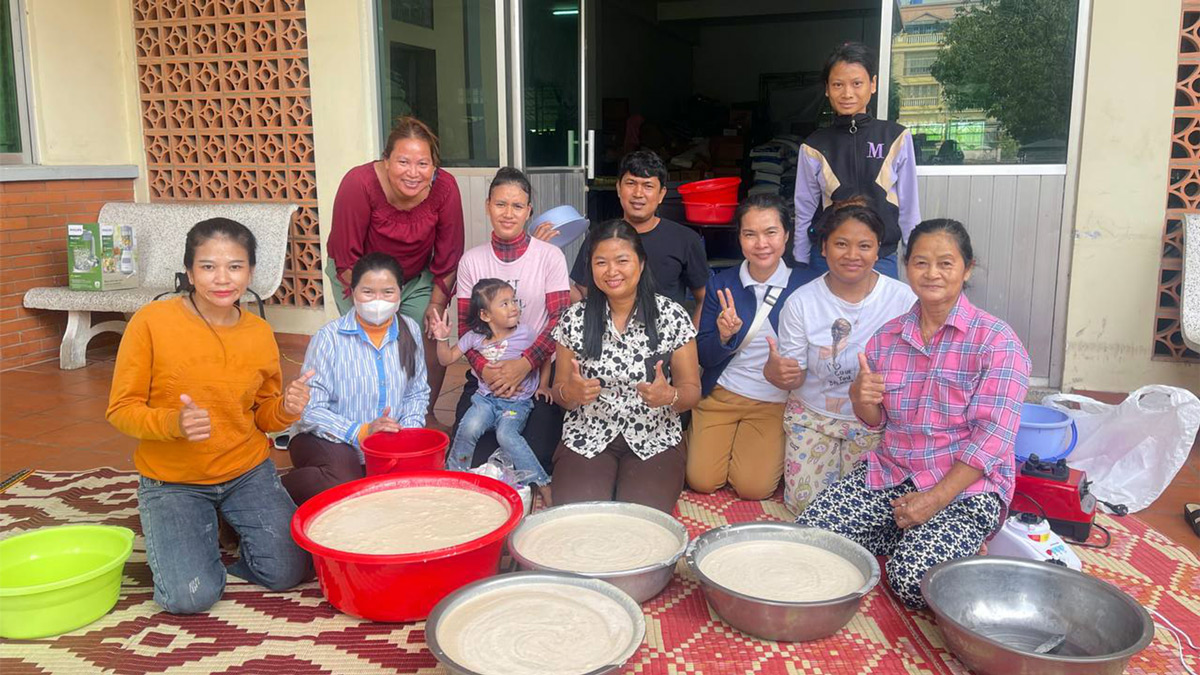
Holt Cambodia’s nutritionist also facilitated workshops that taught caregivers how to make nutrient-rich smoothies for the children. The smoothies provide the energy and nutrients needed to help children’s brains and bodies grow as well as a treat to lift their spirits.
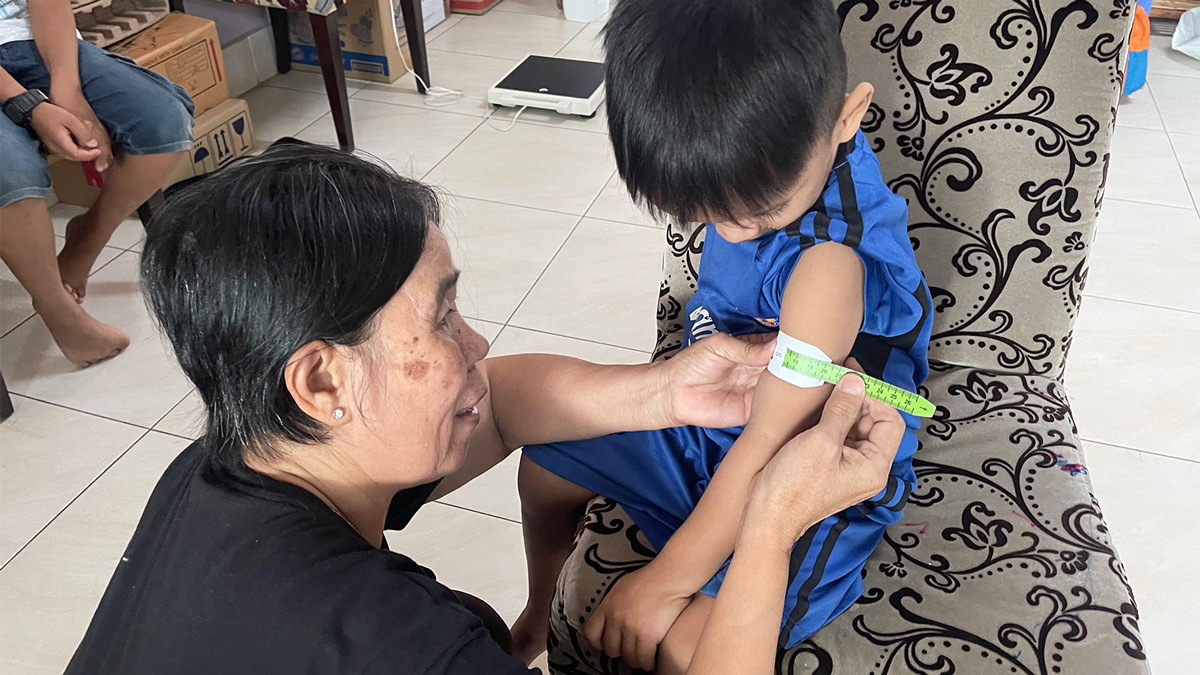
• Health assessments. Health and nutrition screenings are an integral part of Holt’s CNP implementation. On her monthly visits, Holt Cambodia’s nutritionist observed and supported caregivers as they conducted these screenings. Frequently assessing and documenting children’s health, growth, development and feeding skills allows caregivers to identify children who are most at risk and to evaluate which interventions are making a difference.
• Feeding. Children living at the NCIC, particularly those with disabilities and medical needs, experience nutrition risks and malnutrition not only because of what they eat, but also because of how they eat.
In October, NCIC caregivers spent several days with Holt feeding specialists, learning and practicing strategies for feeding children who face feeding difficulties. Afterward, Holt Cambodia’s nutritionist continued to encourage caregivers to reinforce these strategies. Like any skill, feeding children with difficulties takes practice, and change can take time. But gradually, these changes can alter the course of a child’s future. When Holt’s CNP team recently returned to the NCIC for our 6-month evaluation, we witnessed some amazing progress!
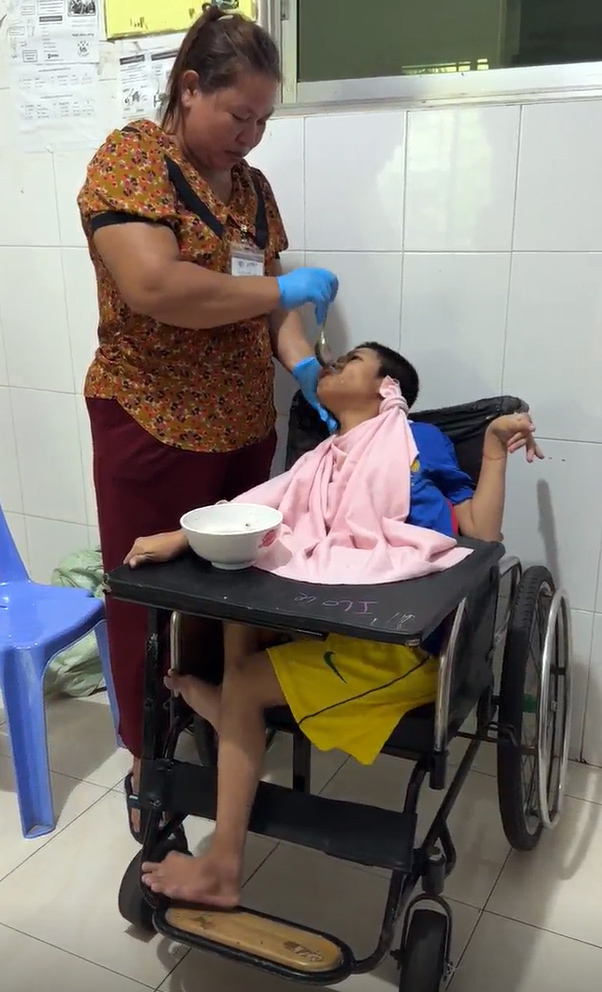
In the past, caregivers found themselves trying to get as much food into the bellies of children in the shortest amount of time. After all, there were hundreds of children to feed and many other daily tasks to accomplish. But based on our prior research and experience, Holt’s team understood this dilemma — and knew exactly how to help. Rather than offering overnight fixes, our team began to educate caregivers on safer, higher quality feeding techniques that would, with practice, make caregiving easier and improve the nutrition outcomes for children.
Life-Changing Nutrition for Arun
In one case, our team has already begun to see results. Arun* is a young boy with severe cerebral palsy. During mealtimes, Arun experienced extreme muscle stiffness and a rigid jerking movement of all his body parts. His caregivers were exhausted and unsure of how best to feed him. They attempted to hold Arun’s head still and spoon-feed him as quickly as possible — but it was clear that both Arun and his caregivers were uncomfortable.
Arun was also frequently getting sick as a result of these feeding practices. Unsafe feeding practices can lead to severe health complications like pneumonia, which can be extremely difficult to overcome for a child with disabilities.
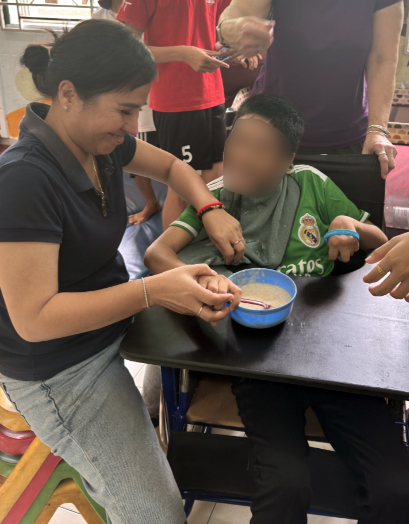
During the CNP training last October, Holt’s team worked with Arun and his caregivers to find ways to make mealtimes safer and more enjoyable. It started with positioning. As soon as the team moved Arun and his caregiver into a more comfortable and supported position, where they could be seated at eye level with one another, there was an immediate shift in energy. Our team also began using a spoon that was safe for Arun to help feed himself, which made another difference at mealtimes.
When Holt’s nutrition team returned to the NCIC in March to conduct our evaluation, we witnessed an incredible change. Arun and his caregiver were in sync with one another and working together at feeding times. The caregiver was no longer fighting Arun’s movements, and Arun was no longer straining to feed himself now that he was in a proper seated position. Upon seeing this improvement, the whole room of caregivers, children and Holt staff cheered for this amazing accomplishment!
A Call to Action
Six months after our first training sessions, the changes at the NCIC are proof that sustainable impact is built through ongoing partnership, encouragement and investment in the people who care for children every day. Through continued mentoring, practical follow-up and the dedication of Holt Cambodia’s local team, your support has helped ensure that caregivers at the NCIC have not only gained new knowledge, but also the confidence to put their new skills into practice in meaningful ways.
At the NCIC, mealtimes are becoming safer, more joyful and more nourishing. Caregivers are seeing children differently — not simply through the demands of daily care, but as individuals deserving of dignity, comfort and connection. Small changes, repeated day after day, are creating a healthier future for hundreds of vulnerable children.
While this work continues, the transformation already taking place shows what is possible when caregivers are empowered with the right tools, support and hope. Thanks to your support, lives at the NCIC are changing — one meal, one caregiver and one child at a time.
*Name has been changed to protect privacy
Help a Child with Special Needs
Be the reason a child with special needs receives the lifesaving medical care they’re waiting for.